
How to Choose Bituminous Shingles for Your Roof
Bituminous shingles are a complete roofing system rather than a simple roof covering. Proper selection directly affects waterproofing performance, service life, energy behaviour and the overall durability of the building.
1. Modern Types of Bituminous Shingles
Contemporary roofing systems are based almost exclusively on fiberglass-reinforced bituminous shingles, which meet modern requirements for fire resistance, dimensional stability and long-term durability.
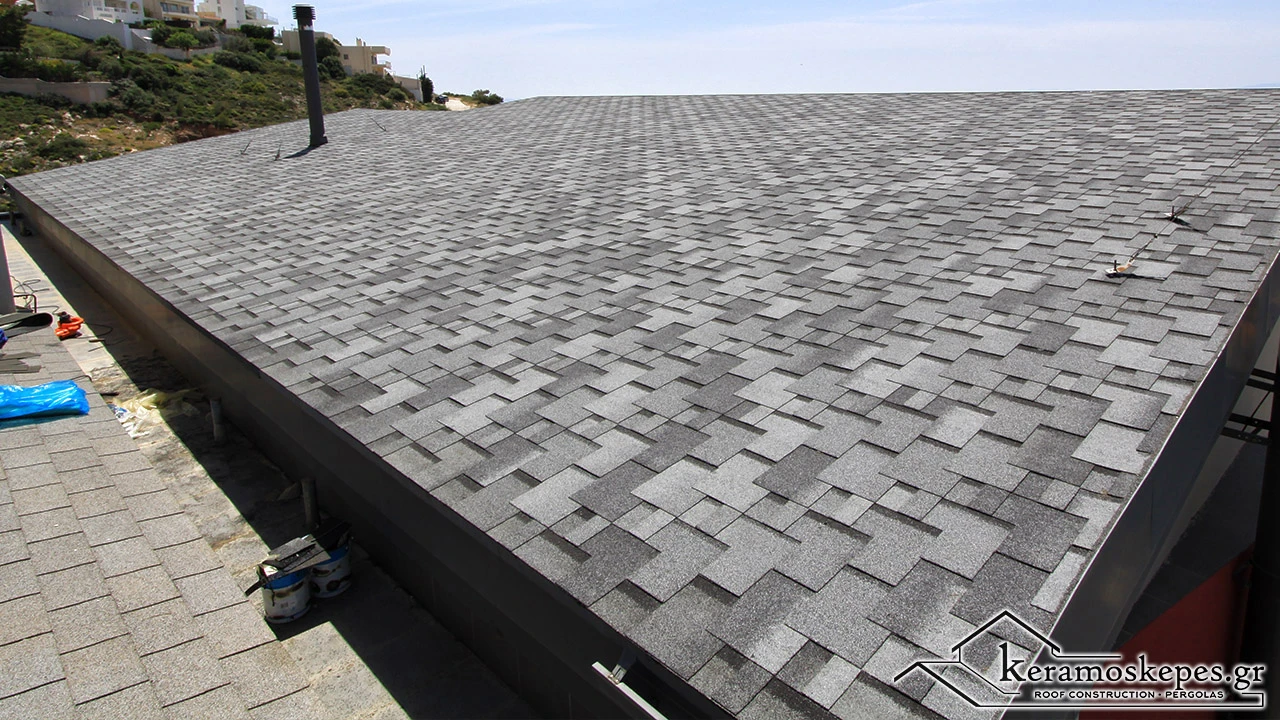
- 3-Tab Shingles: Lightweight and cost-effective shingles with a flat, uniform appearance. Mainly suitable for secondary buildings or projects with basic aesthetic demands.
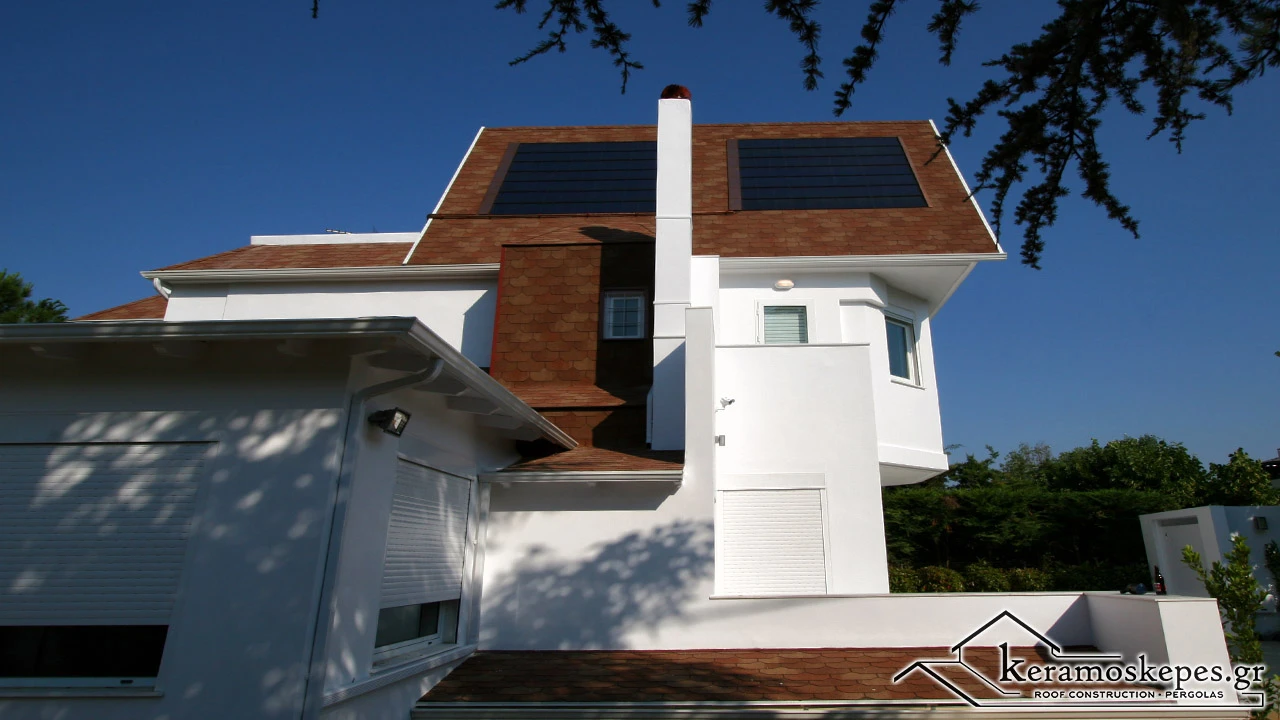
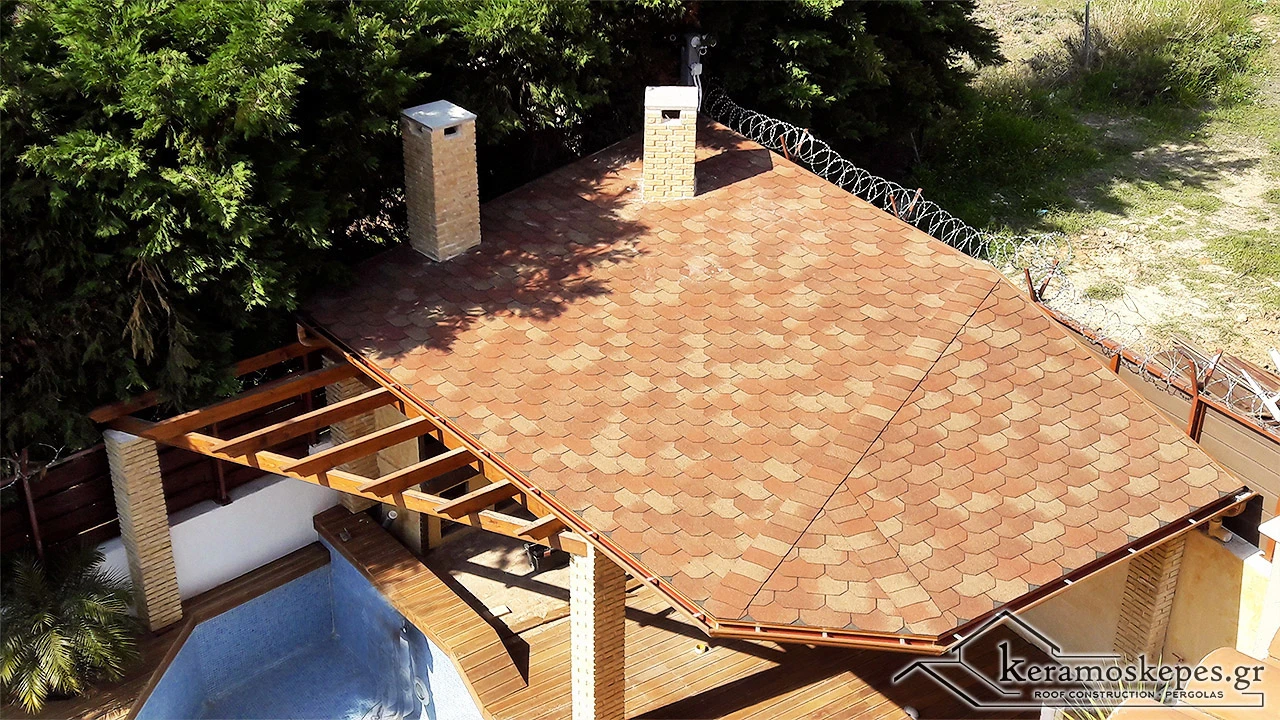
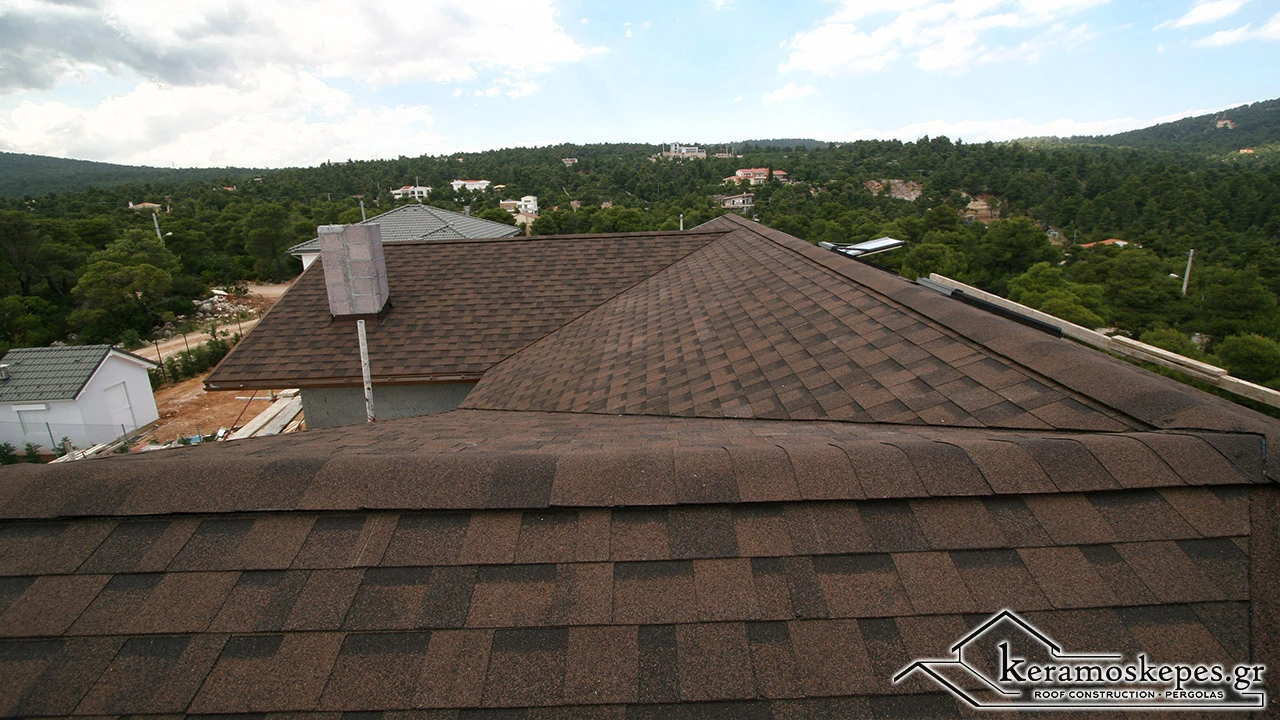
- Architectural / Laminated Shingles: Multi-layer shingles with increased thickness and a three-dimensional profile. They offer enhanced wind resistance and a more refined architectural appearance.
- Premium & High-Definition Shingles: Advanced laminated products with reinforced granules, increased weight and improved mechanical performance for demanding applications.
2. Resistance to Weather Conditions
Roofing materials must be selected based on actual climatic exposure and the geographical location of the building.
- Wind Resistance: Certified performance exceeding 130–150 km/h, according to ASTM or equivalent European standards.
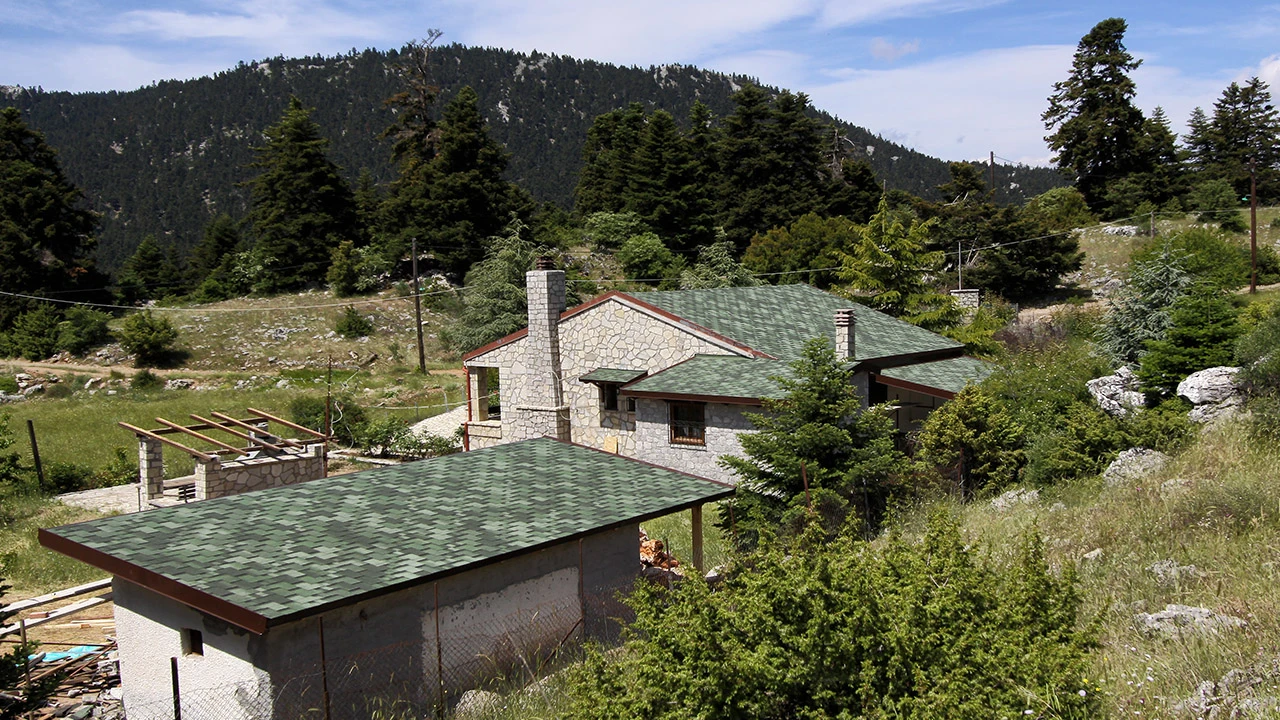
- Snow and Freeze–Thaw Cycles: Adequate flexibility and resistance to cracking at low temperatures are essential for cold or mountainous regions.
- Solar Radiation and UV: High-quality mineral granules and Cool Roof ratings help reduce surface temperature and long-term material ageing.
An important part of selecting the right roofing system is distinguishing technical reality from common misconceptions caused by improper installation practices.
Professional Insight vs Common Myths
-
❌ Myth: Bituminous shingles are easily lifted by wind.
✔ Professional insight: When installed on a properly designed roof system, with certified fastening patterns and suitable decking, bituminous shingles demonstrate excellent wind resistance. -
❌ Myth: They deteriorate quickly under strong sunlight.
✔ Professional insight: UV performance depends on granule quality and product certification, not on the fact that the material is bituminous. -
❌ Myth: They are suitable only for low-cost or temporary buildings.
✔ Professional insight: Architectural and premium shingles are widely used internationally in high-spec residential and demanding construction projects. -
❌ Myth: They are unsuitable for snow and freezing conditions.
✔ Professional insight: Proper flexibility and freeze–thaw resistance make bituminous shingles suitable even for cold climates, when the roofing system is correctly designed. -
❌ Myth: Local damage requires full roof replacement.
✔ Professional insight: Localised repairs are usually straightforward, without the need for extensive roof removal. -
❌ Myth: All bituminous shingles are essentially the same.
✔ Professional insight: Significant differences exist in thickness, weight, granule quality, certifications and expected service life, depending on the product category and manufacturer.
3. Appearance, Thickness and Weight
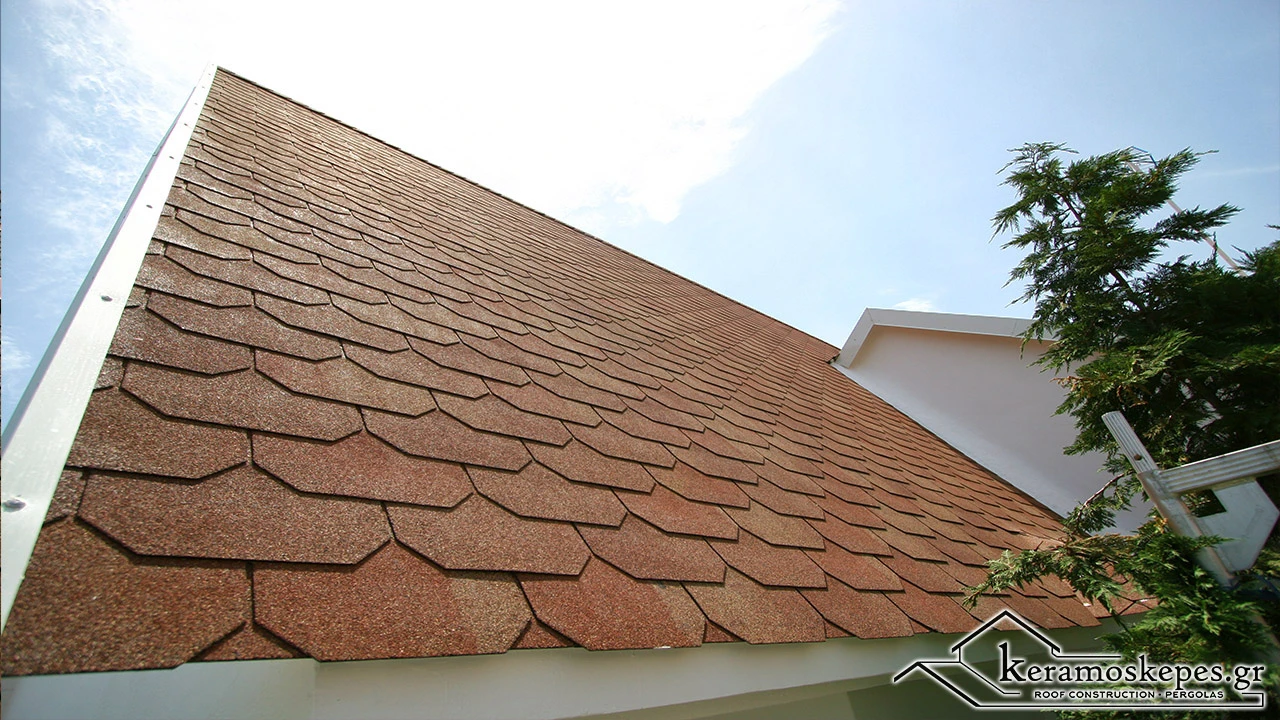
Beyond aesthetics, thickness and weight directly influence wind resistance, longevity and overall roof performance.
- Heavier shingles generally offer improved wind uplift resistance.
- Granule quality determines long-term colour stability.
- Colour selection can also contribute to thermal performance.
4. Service Life and Warranty
- Typical service life ranges from 20 to 50 years.
- Warranty terms should clearly cover both material quality and correct installation requirements.
- Established international manufacturers include Tegola Canadese, IKO, GAF, CertainTeed.
5. Roof Deck, Waterproofing and Installation
Even high-quality shingles will underperform without proper roof preparation and correct installation procedures.
- Roof decking should consist of OSB 3 or exterior-grade plywood, securely fixed, level and dimensionally stable.
- A breathable bituminous underlayment must be installed over the entire roof surface.
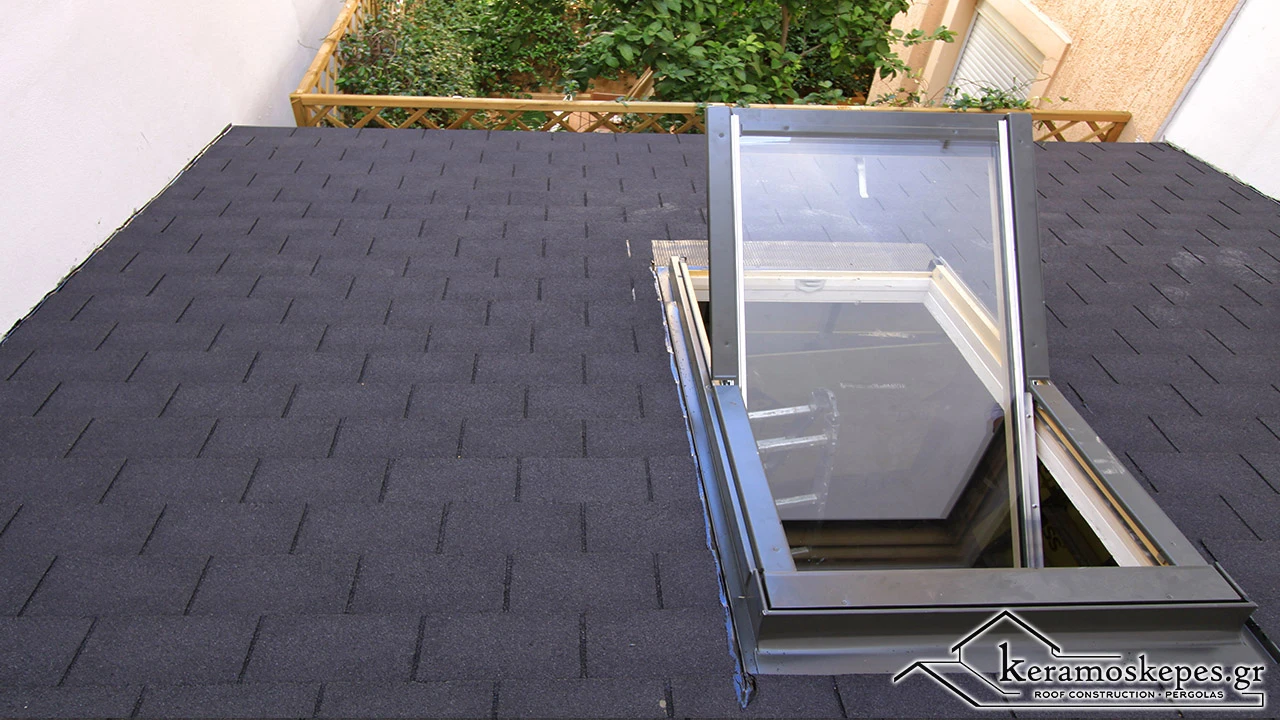
- Self-adhesive waterproof membranes (Ice and Water Shield) are required at eaves, valleys, chimneys and roof penetrations.
- Proper roof ventilation is essential to prevent condensation, overheating and premature material degradation.
6. Environmental and Technical Considerations
- Many modern shingles are recyclable and reused in asphalt products.
- Low-VOC manufacturing processes are increasingly standard.
- Compliance with European and international standards is essential.
Conclusion
Bituminous shingles represent a reliable and modern roofing solution when correctly selected and professionally installed. Material quality, roof preparation and technical execution ultimately determine long-term roof performance.
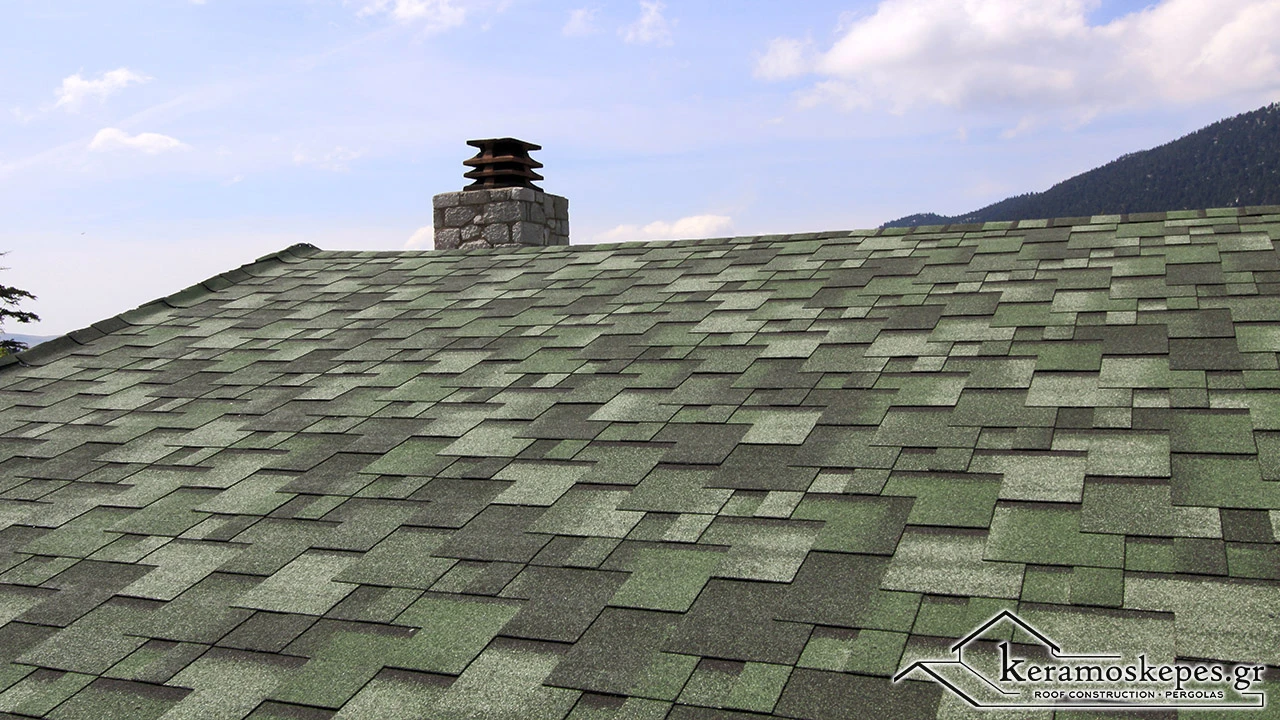
Professional application remains the most reliable criterion of evaluation. View representative project photographs, as implemented in real conditions.
keramoskepes.gr provides professional expertise in bituminous shingle roofing systems, focusing on technical accuracy, durability and long-term reliability.
For proper roof insulation, membranes and overall roof performance, see the Roof Insulation Guide.
Frequently asked questions about bituminous shingles
What are modern bituminous shingles made of?
Modern bituminous shingles are fiberglass-based roofing materials reinforced with asphalt and mineral granules, offering durability, waterproofing, UV resistance, and dimensional stability.
Which roof substrate is required for bituminous shingles?
A continuous, flat substrate such as OSB 3 or marine-grade plywood is required to ensure correct fastening, sealing, and long-term roof performance.
Is underlayment mandatory for bituminous shingle roofs?
Yes. A breathable bituminous underlayment is required across the entire roof surface, combined with self-adhesive waterproofing membranes at critical areas such as eaves and valleys.
Do bituminous shingle roofs need ventilation?
Proper roof ventilation is essential to prevent condensation, reduce heat buildup, and extend the lifespan of both the shingles and the roof structure.